Monitro ansawdd dŵr – dod â chreadigrwydd a gwyddoniaeth at ei gilydd
Water quality monitoring - bringing creativity and science together
Mae Katie Trent yn archwilio sut mae gwaith monitro dŵr Gofod Glas yn dod â gwyddoniaeth a chreadigrwydd ynghyd mewn ffordd chwareus, gynhwysol ac agored. Ac mae hi’n gobeithio, drwy wrando, gofyn cwestiynau a rhannu safbwyntiau, y gallwn lunio syniadau sy’n creu effaith eang, gan arwain at newid go iawn.
Katie Trent explores how Gofod Glas’ water monitoring brings together science and creativity in a playful, inclusive and open way. And how she hopes that by listening, asking questions, and sharing perspectives, we can shape ideas that ripple out into real change.
Sut dechreuodd y gwaith monitro ansawdd dŵr
Roeddem yn awyddus i ganfod ffyrdd o siarad â phobl am ddŵr, ac yn chwilfrydig i glywed beth oedd ganddynt i’w rannu am eu cysylltiadau â dŵr. Hefyd roeddem yn awyddus i gofnodi eu harsylwadau, eu profiadau, eu straeon a’u cwestiynau rhywsut.
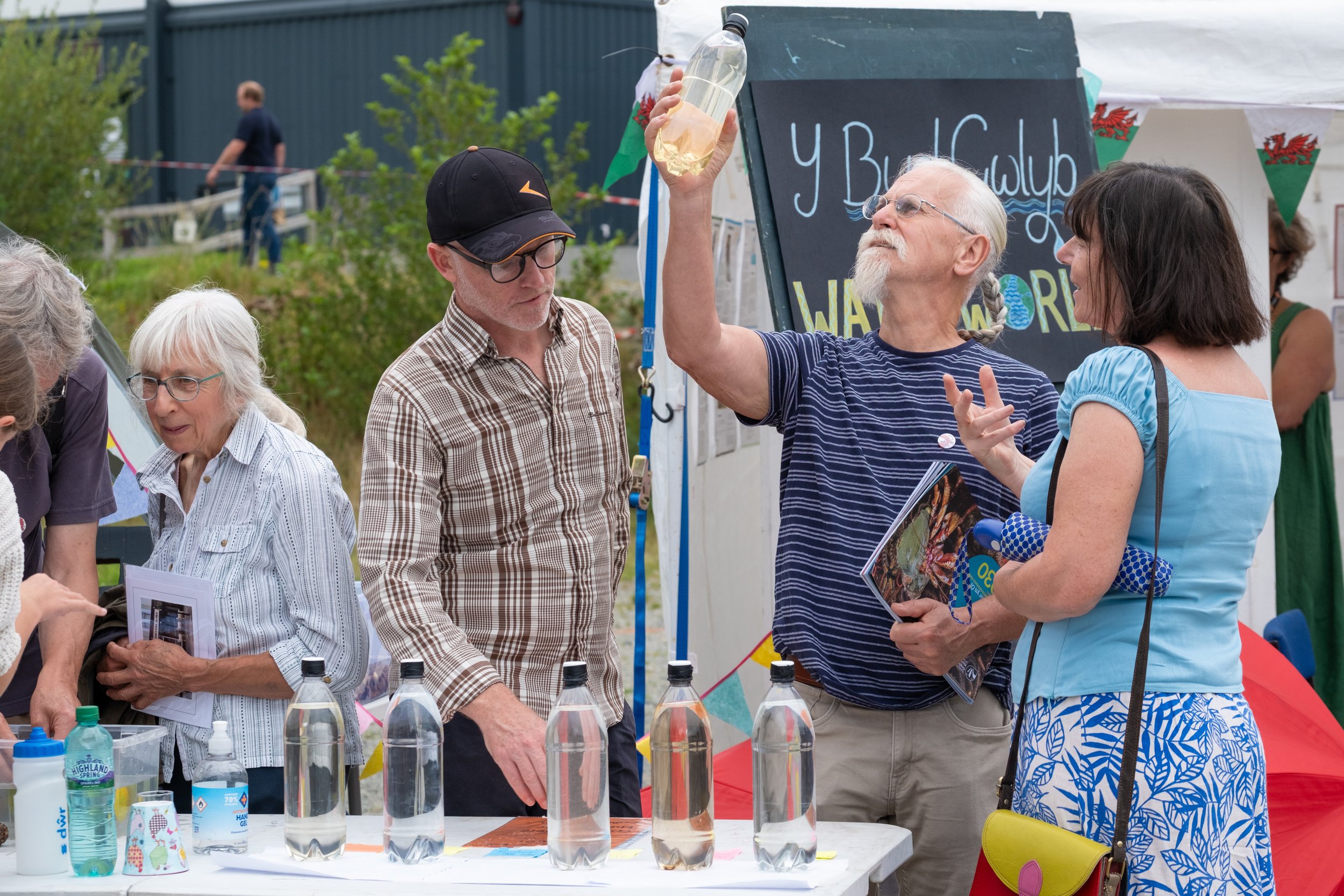
Ym mis Medi 2023, roeddem yn rhan o gyfres o weithgareddau yn ymwneud â dŵr ar gyfer Gŵyl Garrog yn Dolgarrog. Gŵyl wedi’i threfnu gan y gymuned yn ydy hon ac roedd un o’n gweithgareddau yn cynnwys cyfres o boteli clir wedi’u llenwi â dŵr o wahanol rannau o Ddyffryn Conwy (Dalgylch Afon Conwy). Gwahoddwyd pobl i ddyfalu o ble roedd y dŵr yn dod. Fe anogodd hyn bawb i siarad am ddŵr – beth oedd ynddo? beth yw dwr glân? beth – ar wahân i lygredd – all achosi i ddwr newid ei liw?
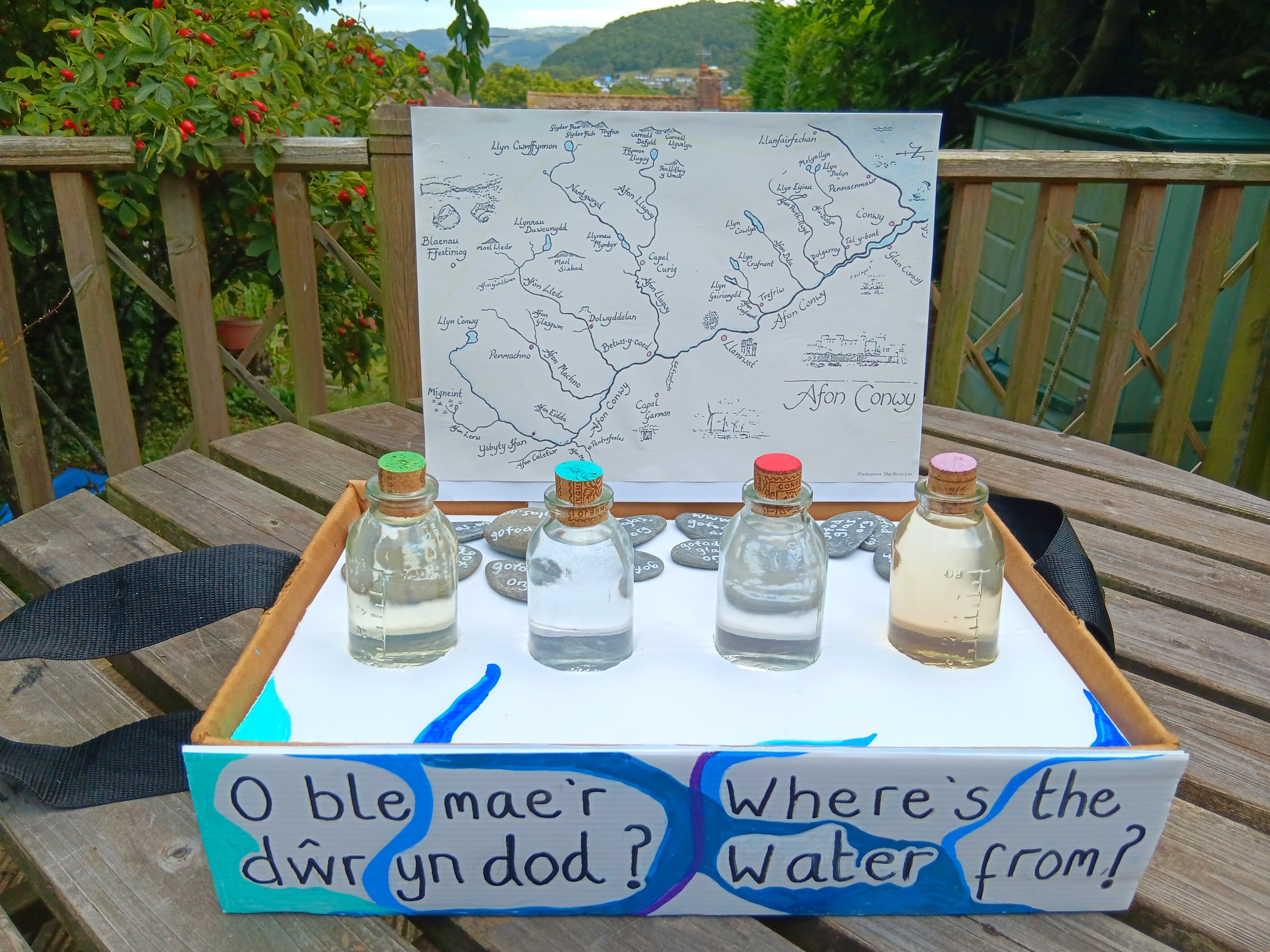
Fel rhan o Gofod Glas, fe wnaethon ni ymestyn y syniad hwn gan greu fersiwn symudol i’w gario o amgylch gŵyliau lleol (wedi’i ysbrydoli gan ein gweithgaredd Dal dy Ddŵr/Hold your Water).
Fe gododd syniadau eraill am berthynas pobl â dŵr yn sgil ein hymchwil hefyd. Er enghraifft roedd Amgueddfa Ddŵr yn gasgliad o ddŵr a roddwyd gan y cyhoedd a straeon i gyd-fynd a nhw, hefyd y Llyfrgell Ddŵr sy’n osodiad amrywiol a hirdymor o ddŵr a thywydd.

lluniau // images: Mark McNulty
How the water quality monitoring began
Initially, as part of the run-up to Gofod Glas, we just wanted to talk with people about water, and curious to hear what they had to share about their connections with water.
In September 2023, we were part of a series of water based activities at Gŵyl Garrog Festival, a community organised festival in Dolgarrog. One of our activities involved a series of clear bottles filled with water from different streams within the Conwy Valley (Conwy River Catchment). People were invited to guess where the water came from. It got everyone talking about water – what was in it? what was clean? what can cause it to be coloured yet not polluted?
Once Gofod Glas was up and running, we wanted to do more of these types of activities. So we created a portable version, where we could walk around local festivals, (inspired by our Dal Dy Dŵr /Hold your water project).
We also wanted to find a way to record their observations, experiences, stories and questions. So we researched other creative projects working with things like collections, installations and storytelling. We were particularly inspired by Museum of Water , a collection of publicly donated water and accompanying stories, also Library of Water, a long-term, multi-faceted installation of water and weather.
Cwestiynau am ansawdd dŵr
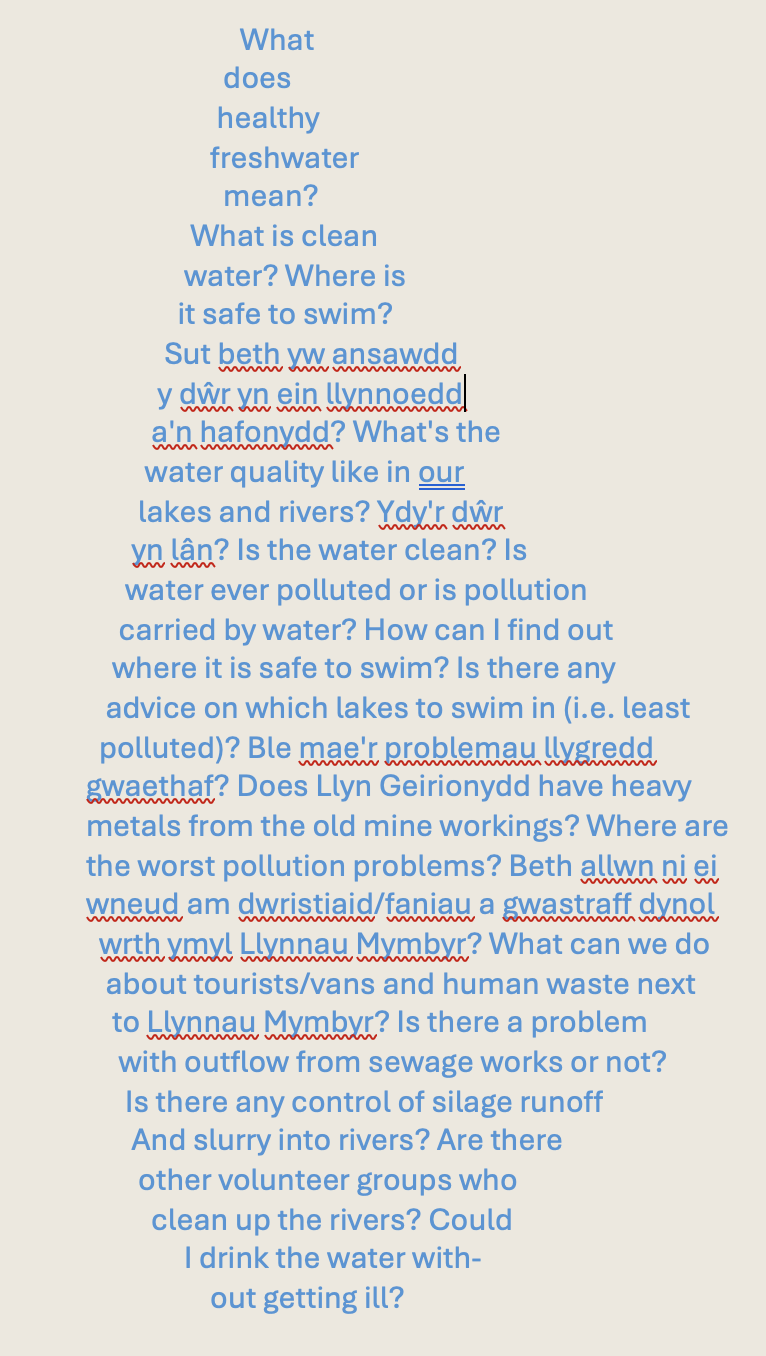
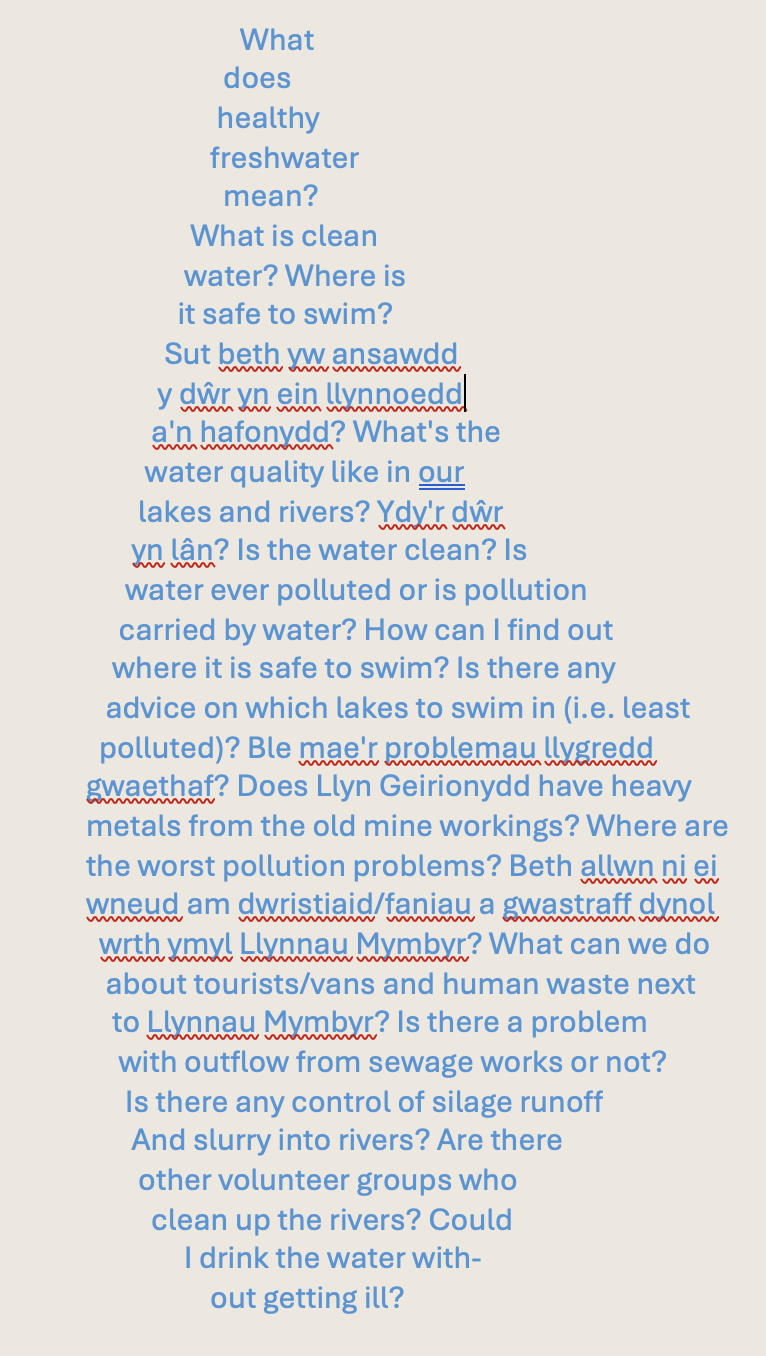
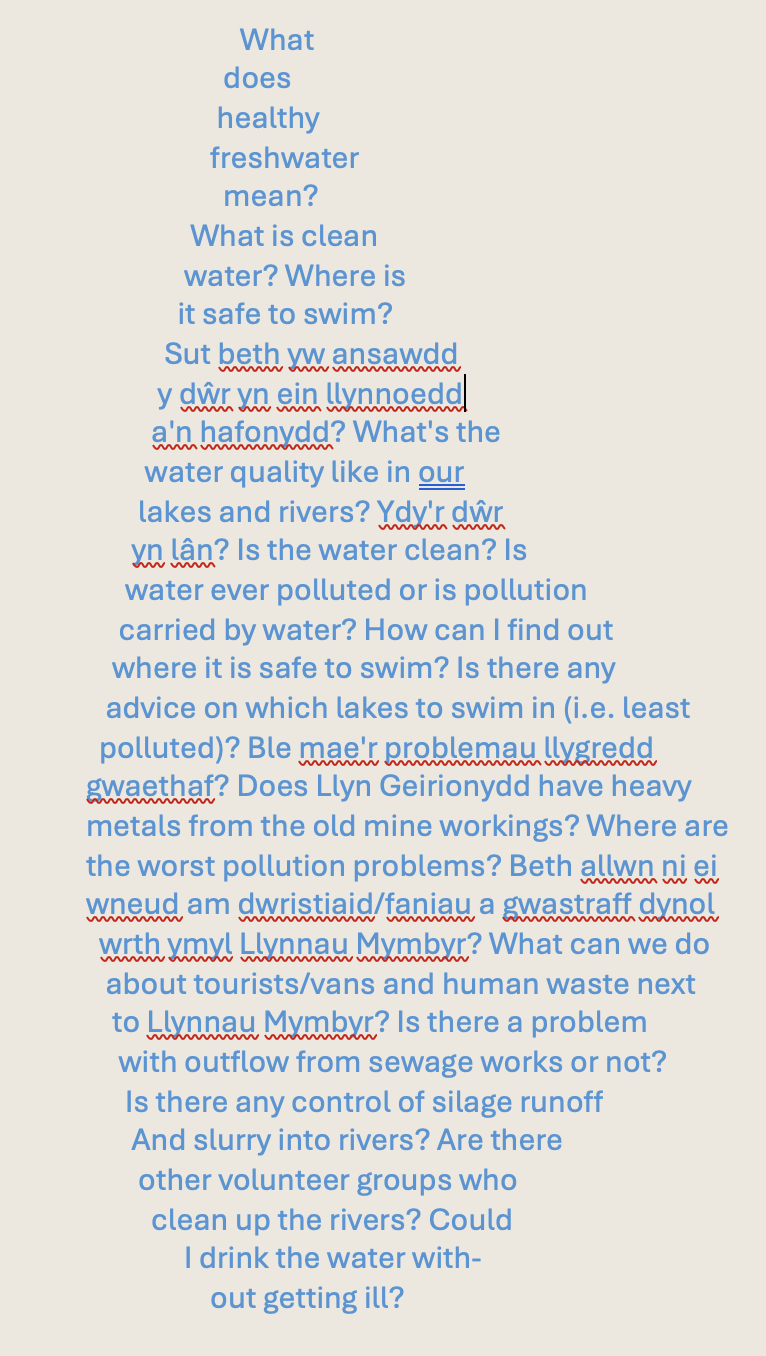
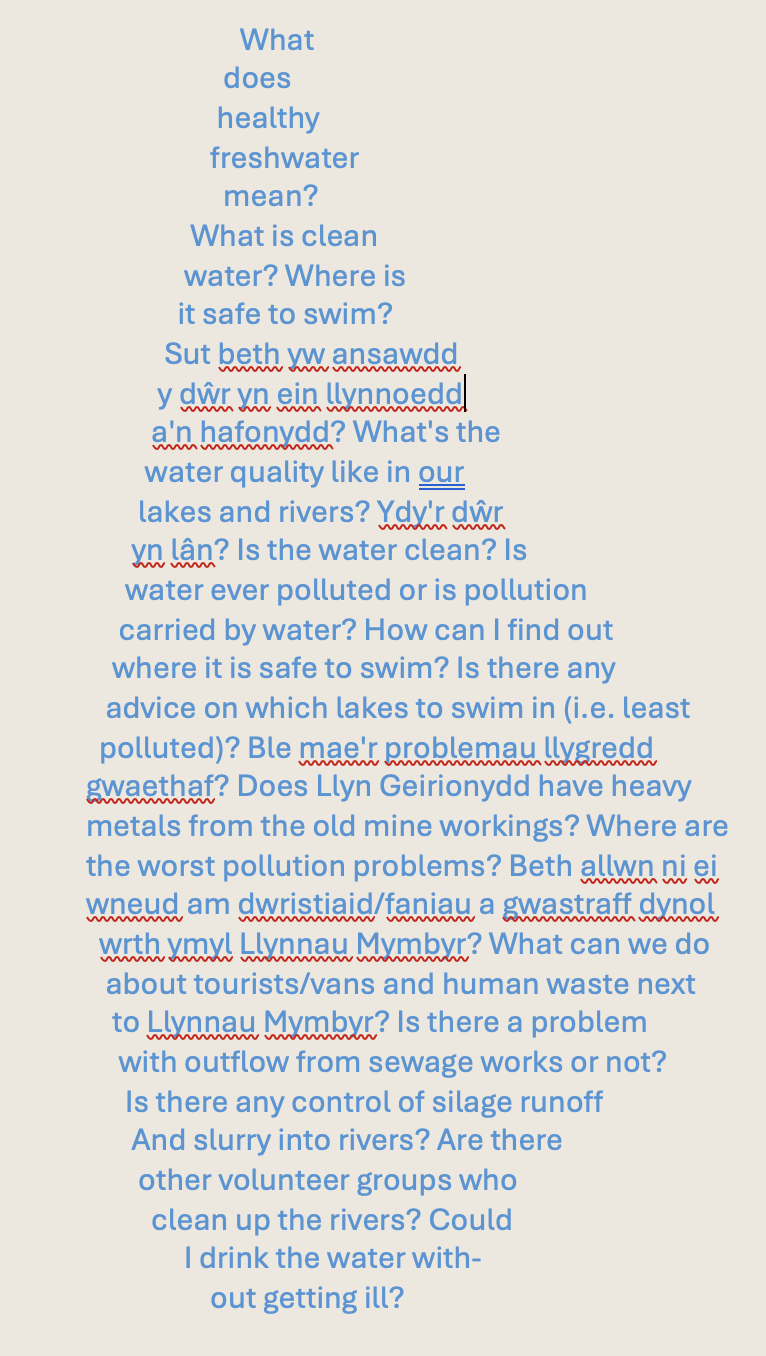
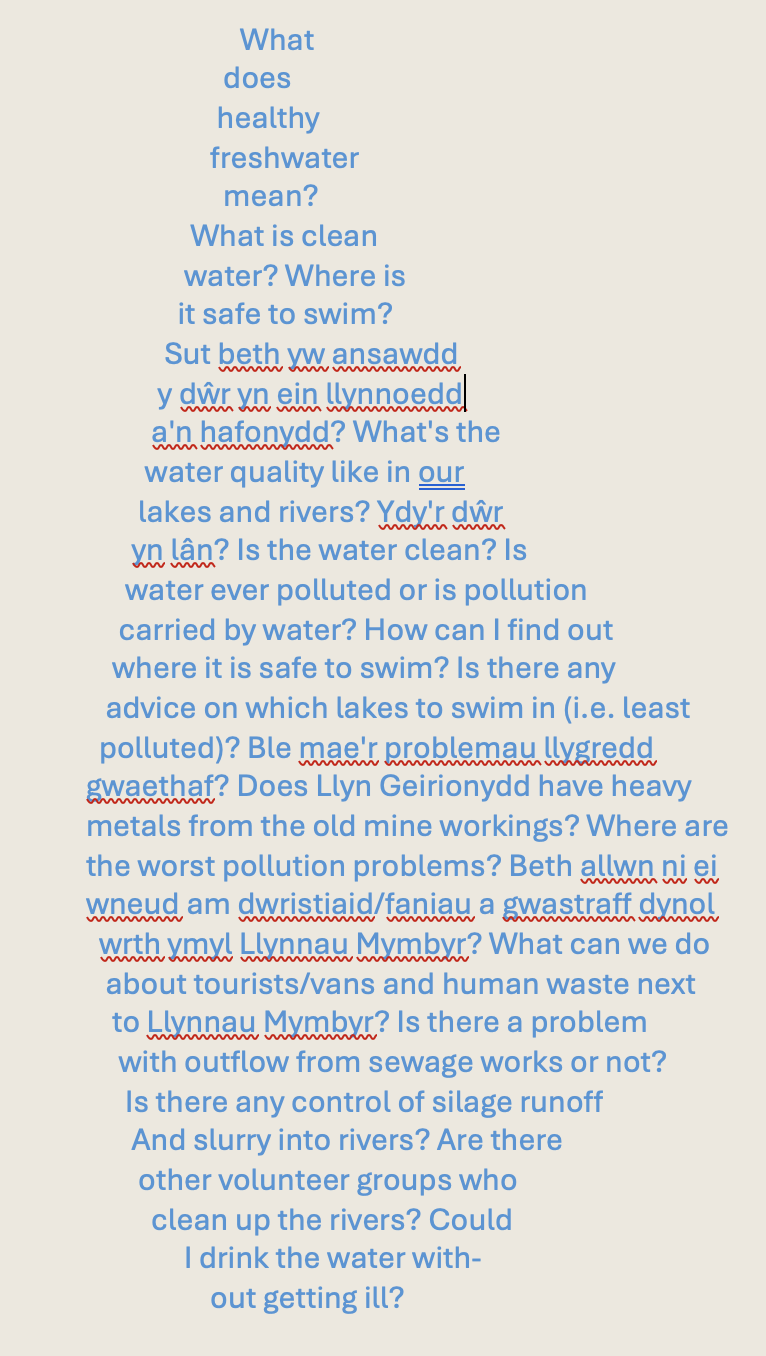
Tua'r un adeg, roeddem wedi dechrau casglu cwestiynau am ddŵr croyw gan y bobol oedd yn cymryd rhan yn Gofod Glas. Ac un o'r setiau mwyaf o gwestiynau oedd yn ymwneud ag ansawdd dŵr.
Mae Katie yn nofio’n rheolaidd mewn dŵr agored ac roedd ei chwestiynau i ddechrau yn ymwneud â glendid a llygredd, ond ehangodd hyn yn fuan i gwmpasu iechyd dŵr ar gyfer natur a system yr afon yn ei chyfanrwydd.
Darganfu ei bod hi’n rhyfeddol o anodd cael gwybod am lendid dŵr yn Nyffryn Conwy, er bod nifer o sefydliadau yn casglu data.
Questions about water quality
Around the same time, we had started collecting questions about freshwater from those taking part in Gofod Glas. And one of the biggest set of questions was about water quality.
Katie is a regular open water swimmer and her questions initially were about cleanliness and pollution, but this quickly expanded to the health of water for all of nature and the river system.
She discovered that it was surprisingly difficult to find out about the cleanliness of water in the Dyffryn Conwy Valley, despite many organisations collecting data.
Y Syniad Samplo
Arweiniodd yr holl weithgareddau hyn, ynghyd â chasglu cwestiynau ac ymchwil, at greu ein prosiect samplo dŵr, ‘Darganfod Be sy yn y dŵr’, ym mis Hydref 2025. Mae’r prosiect yn ymwneud â chyfuno sgyrsiau, arsylwadau a gwyddoniaeth.
Drwy sgyrsiau cynnar â chydweithwyr a phartneriaid, roedd yn amlwg bod y broses o samplo dŵr yn ffordd da i siarad â phobl a chasglu arsylwadau, yn hytrach na bod yn broses gaeth o gasglu data gwyddonol. Cadarnhawyd hyn yn ystod ‘diwrnod rhannu’ ar gyfer ‘Blue Spaces’ – a drefnwyd gan Sefydliad Esmée Fairbairn (ein cyllidwyr) yn Birmingham – lle roedd un o’r sesiynau’n trafod samplo a gwyddoniaeth dinasyddion.
Roeddem am archwilio’r cwestiynau hyn ynghylch ansawdd dŵr, tra hefyd yn ehangu ein hymchwiliad i symud y tu hwnt i’r syniad mai ‘arbenigwyr’ sydd â’r holl wybodaeth. Sut gallem ddefnyddio samplo dŵr i feithrin cymuned o ddiddordeb ac arsylwi... a ble gallai hynny arwain?
The Sampling Idea
All these activities, gathering questions and research led into the creation of our water sampling project, ‘Darganfod Be sy yn y dŵr’ - ‘Discovering what’s in the water' in October 2025. The project is all about blending conversations, observations and science.
Through early conversations with colleagues and partners it was clear that the water sampling was a way to talk to people and gather observations, rather than it being a strict scientific data gathering process. This was reinforced during an Esmée Fairbairn Foundation (our funders) ‘Blue Spaces sharing day’ in Birmingham, where one of the sessions was a discussion about sampling and citizen science.
We wanted to explore these water quality questions while broadening our enquiry away from the idea that ‘experts’ have all the knowledge. How could we use water sampling to build a community of interest and observation… and where might that lead?
lluniau/images: Lleu Williams
Y Broses
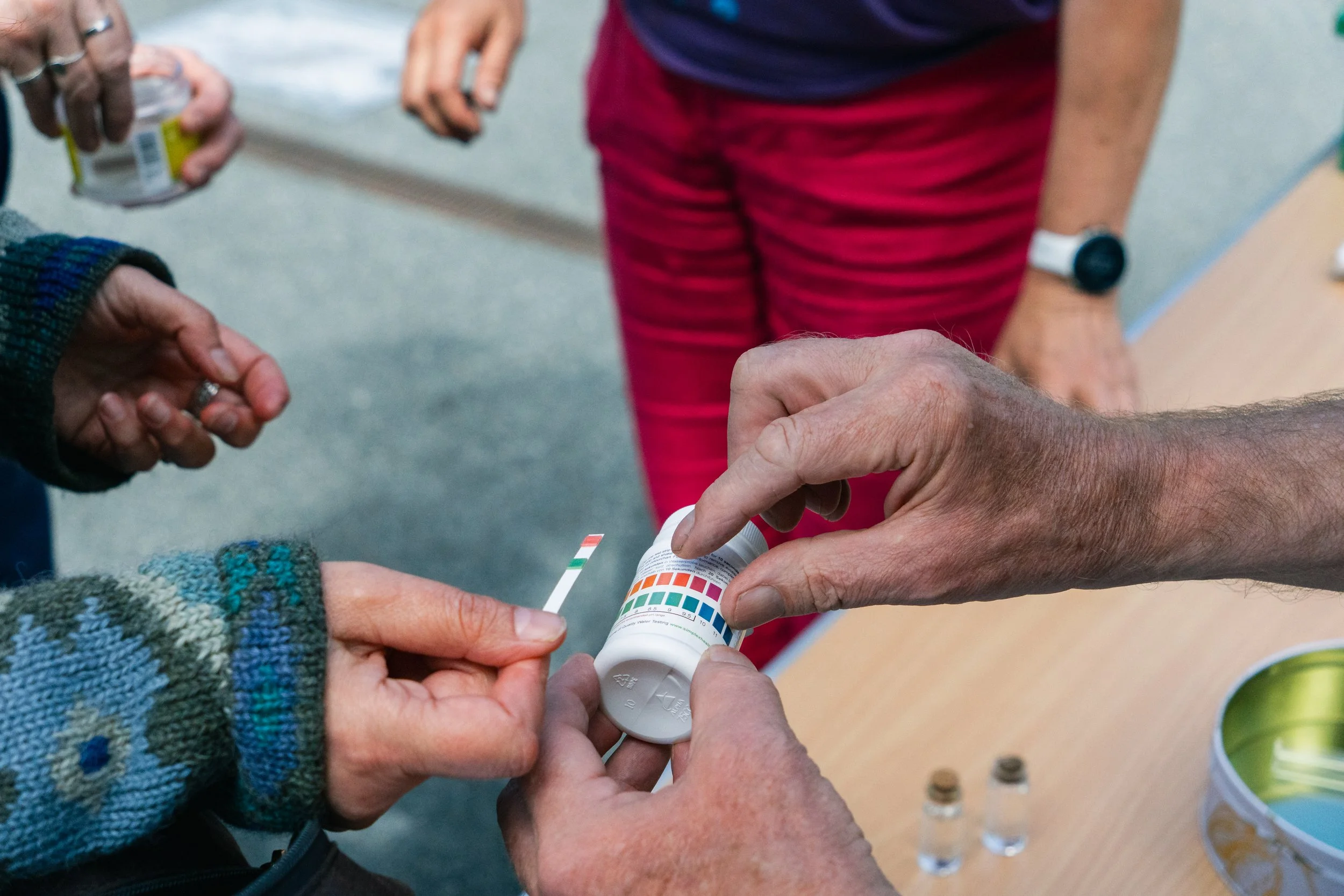
Yn y lle cyntaf, gwnaethom alwad gyhoeddus i bobl gasglu samplau dŵr a chynnal profion gyda nhw ar gyfer rhai paramedrau sylfaenol, sef ffosffad, nitrad, pH, yn ogystal â metelau trwm. Mwy o wybodaeth yma.
[Sylwer bod y broses brofi wedi esblygu, ac erbyn hyn mae’n bosibl profi am ddargludedd a chlorin hefyd.]
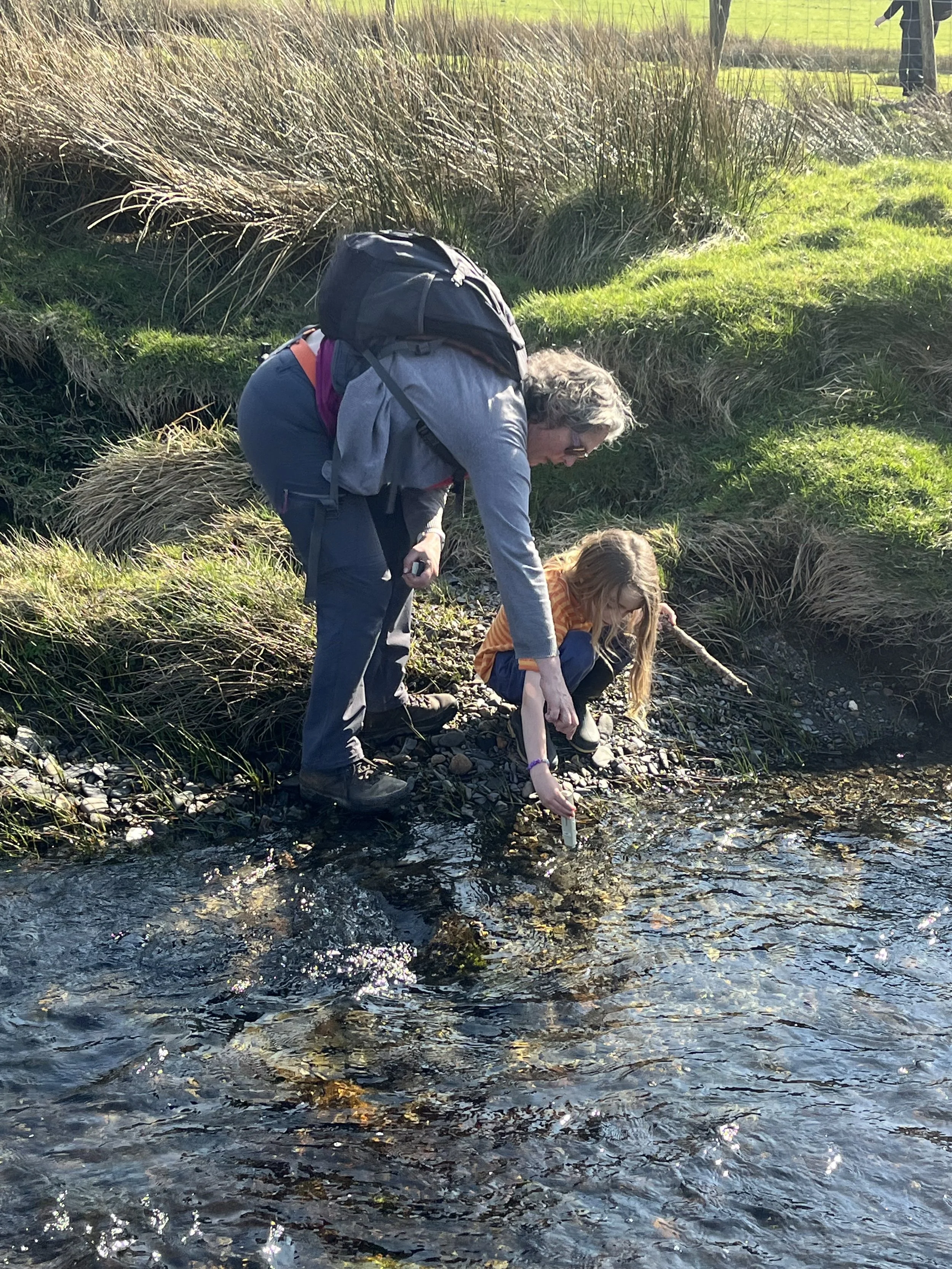
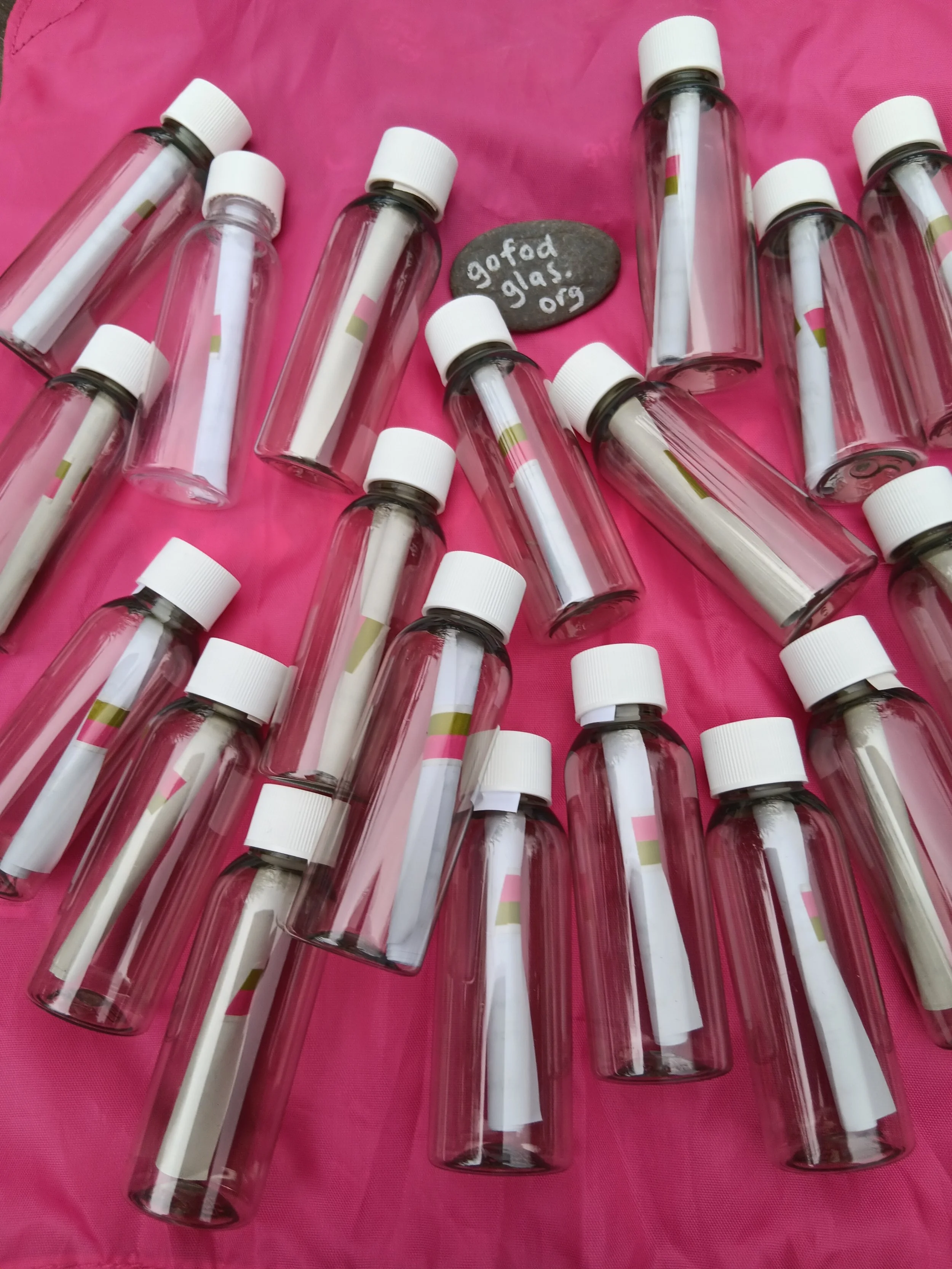
Rhoddasom hefyd anrhegion – ‘negeseuon mewn potel samplu’ – i’r rhai a oedd yn cymryd rhan mewn gweithgareddau eraill, fel ein Dro Dŵr. Roedd y neges yn cynnwys dolen i wefan Gofod Glas, a oedd yn rhoi cyfarwyddiadau ar sut i gasglu sampl dwr a’i ddychwelyd i gael ei brofi.
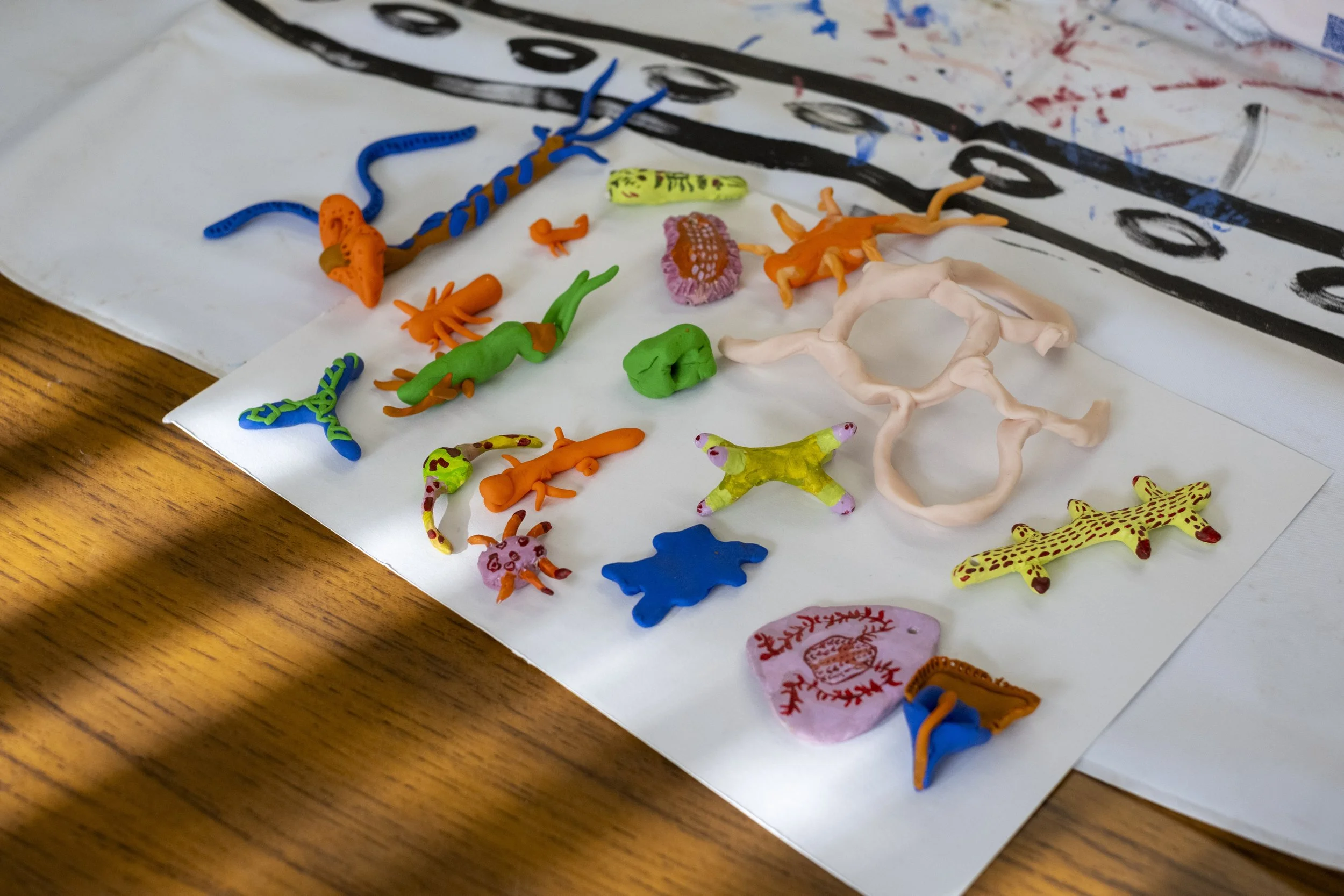
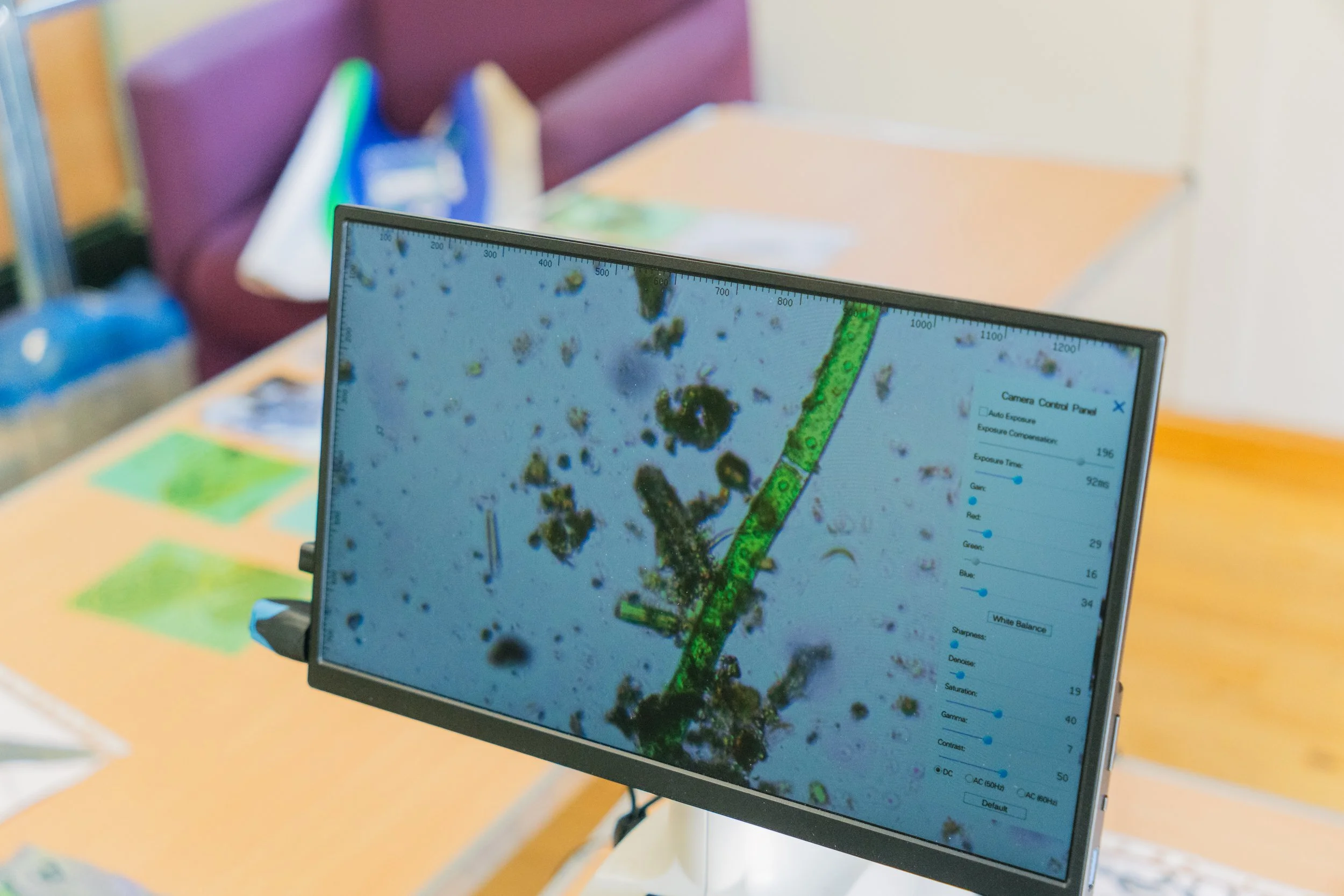
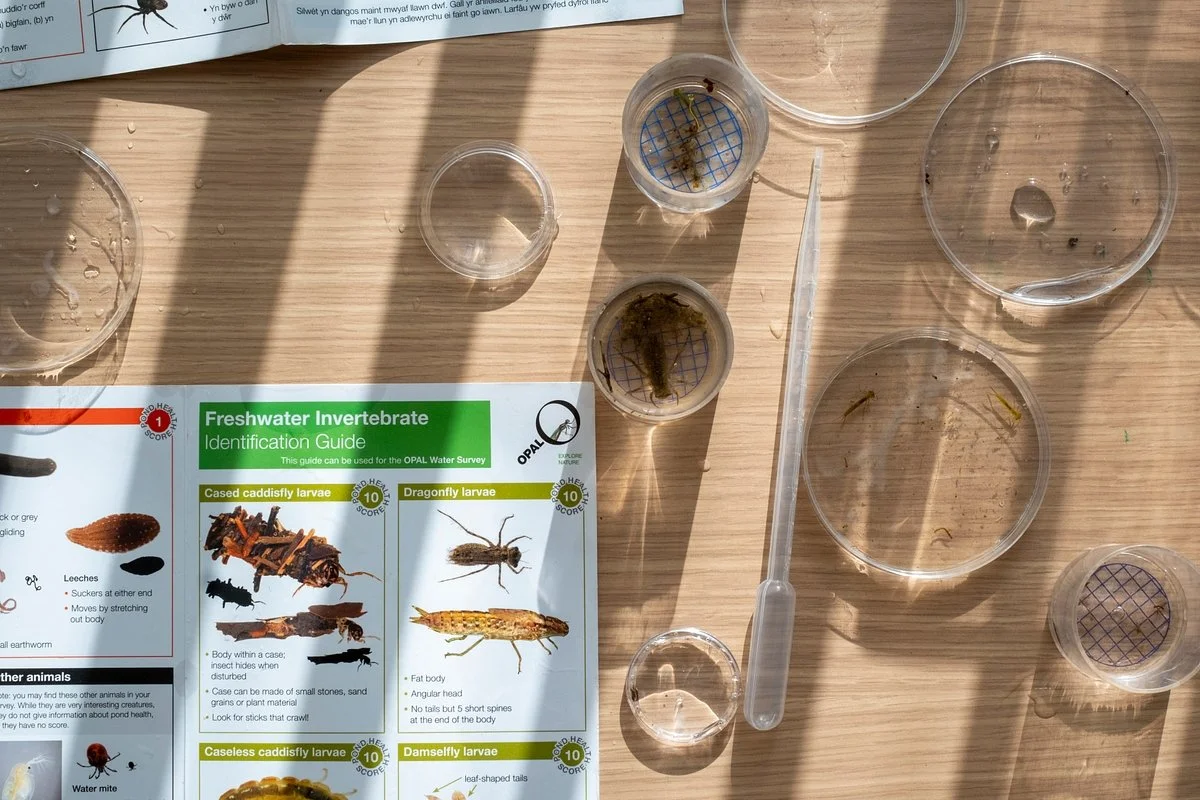
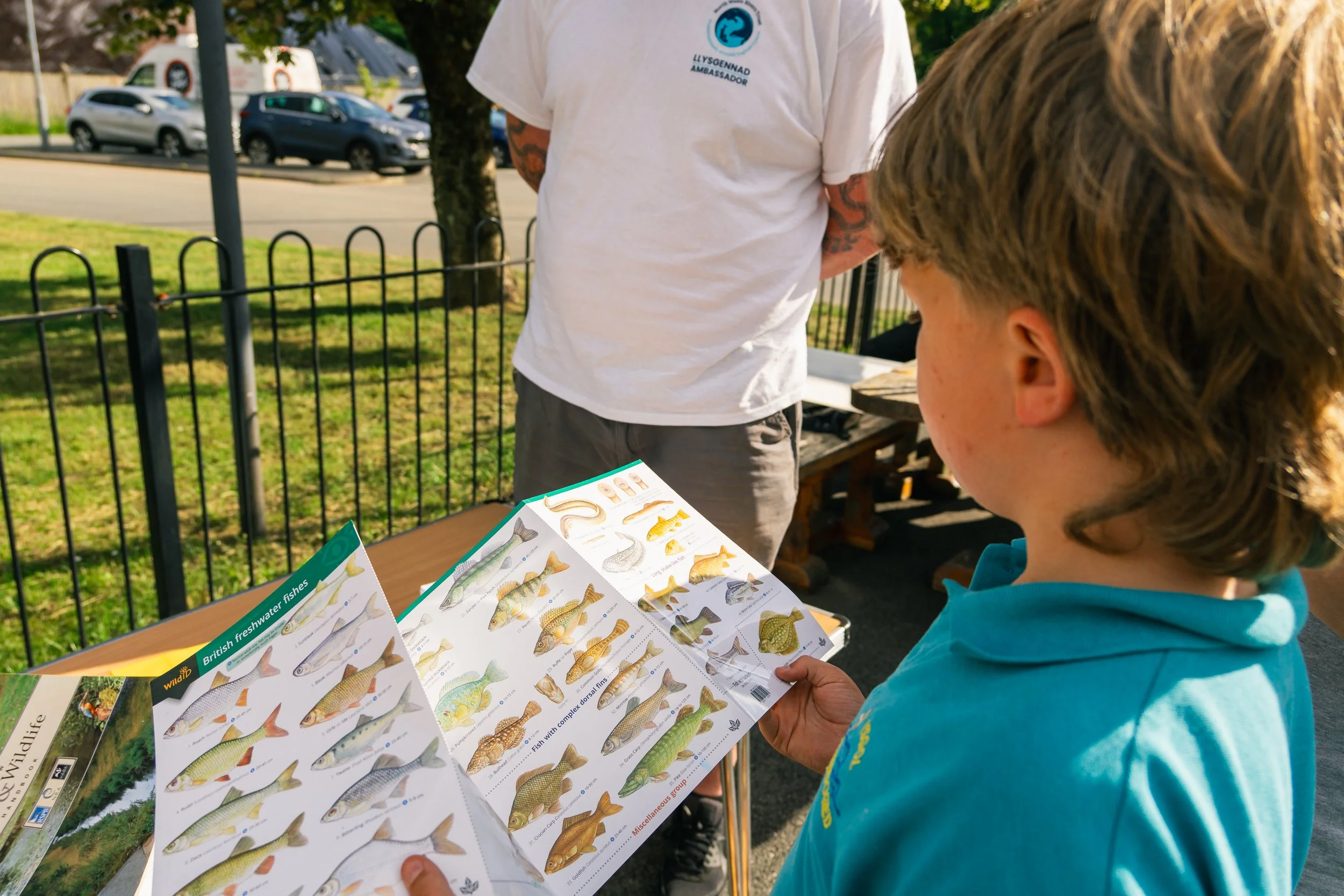
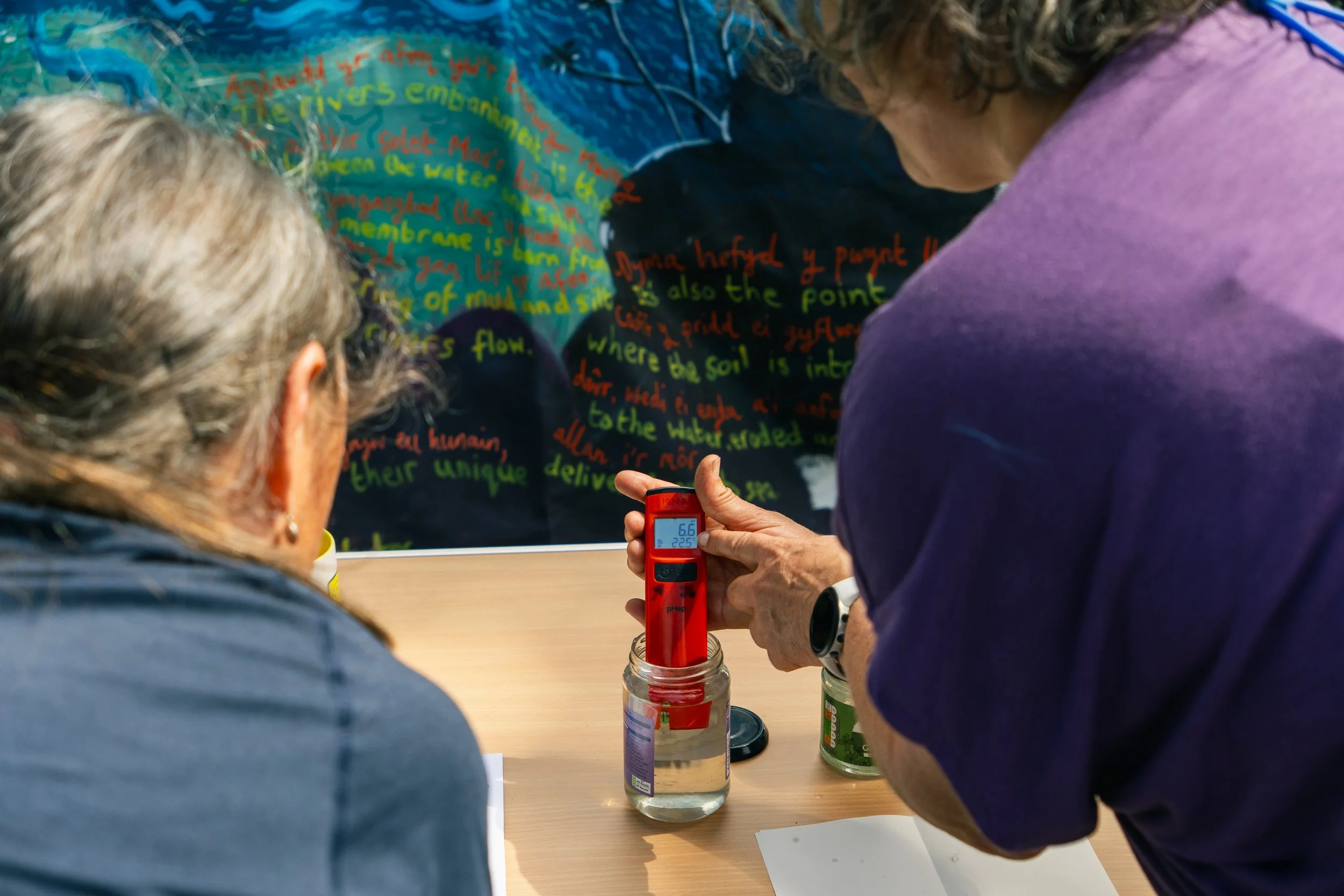
Yn 2026, dechreuon ni gynnal digwyddiadau Be sy yn y dŵr? (e.e. ym Mhenmachno, Dolgarrog a Llanrwst, ac yng Ngharnifal Dolwyddelan). Yn y digwyddiadau hyn, roedd pobl yn dod â samplau dŵr a oedd yn cael eu profi ar y cyd. Roedd cyfle hefyd i edrych trwy ficrosgopau ar ddiatomau, darganfod anifeiliaid di-asgwrn-cefn, arbrofi, braslunio a cherflunio eich creaduriaid dŵr eich hun, a chysylltu â gweithgareddau eraill Gofod Glas. Er enghraifft, edrychwch ar ein digwyddiad yn Llanrwst ym mis Mehefin 2026, a gynhaliwyd yn fuan ar ôl i bryderon mawr gael eu codi ynghylch llygredd yn yr afon yn Llanrwst.
Roeddem hefyd eisiau dod o hyd i ffyrdd o rannu’r samplau, a chanlyniadau’r profion, mewn ffordd greadigol...

Llun/Image: Mark McNulty
The Process
Initially we made a public call out for people to collect water samples and test together for some basic parameters i.e. phosphate, nitrate, pH, also heavy metals. More info here.
[Note the testing has evolved, and it now can include testing for conductivity and chlorine.]
We also gave people taking part in other activities such our Dro Dŵr // Water Walks, gifts of ‘messages in a sampling bottle’. The message had a link to the Gofod Glas website which gave them instructions on how to take a sample and bring it for testing.
And in 2026, we started hosting Be sy yn y dŵr? // What’s in the Water? events (e.g. Penmachno, Dolgarrog and Llanrwst, and at Dolwyddelan Carnival). At these events, people brought water samples which we tested together, and there was also the opportunity to look through microscopes at diatoms, discover invertebrates, experiment, sketch and sculpt your own water creatures, and link into other Gofod Glas activities. For example see our Llanrwst event, in June 2026, held shortly after a major concerns were raised about pollution in the river in Llanrwst.
We also wanted to find ways in which the samples, and the results from testing, could be shared creatively….

Canlyniadau creadigol ͏– Arddangos y Samplau
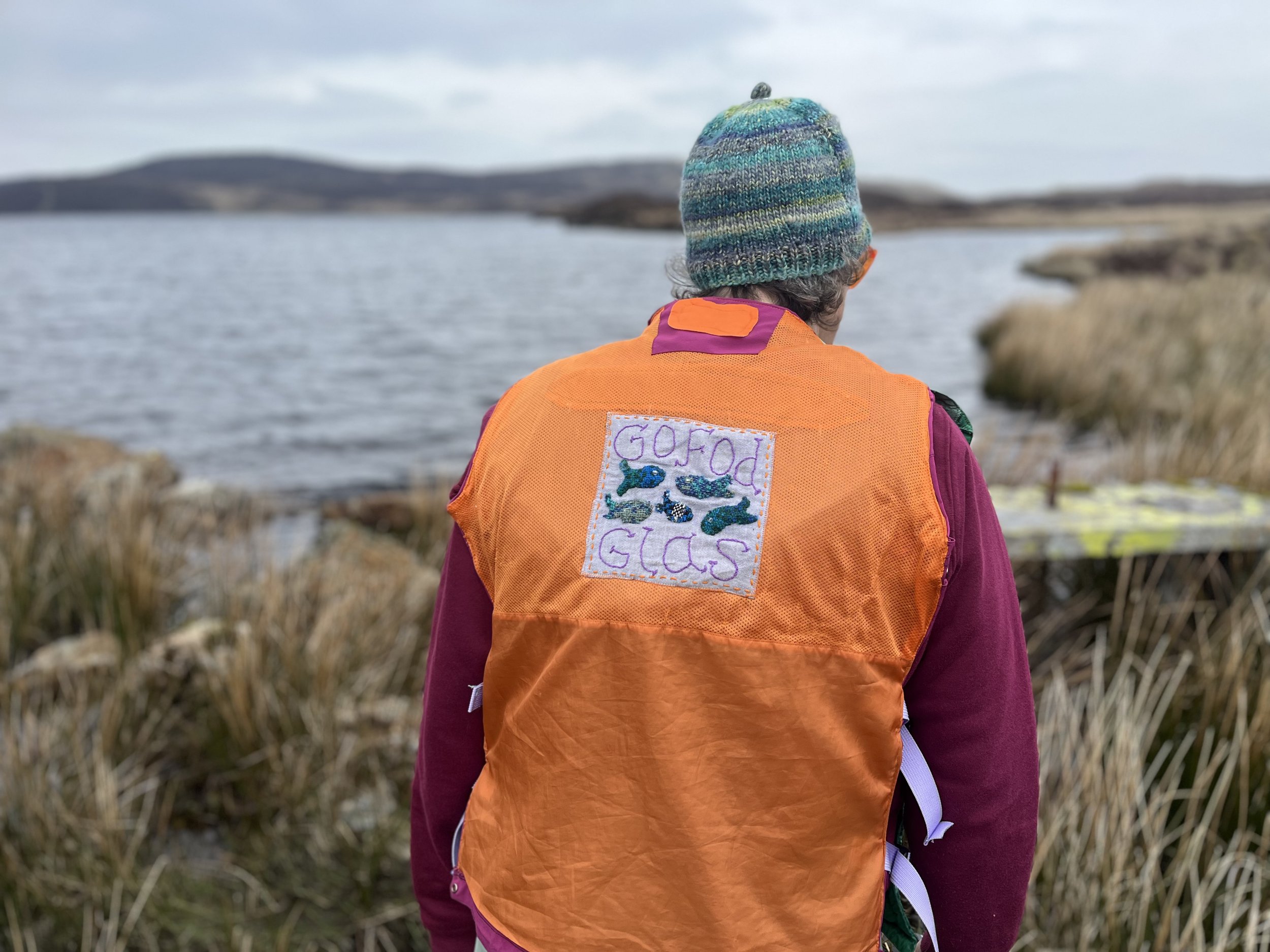
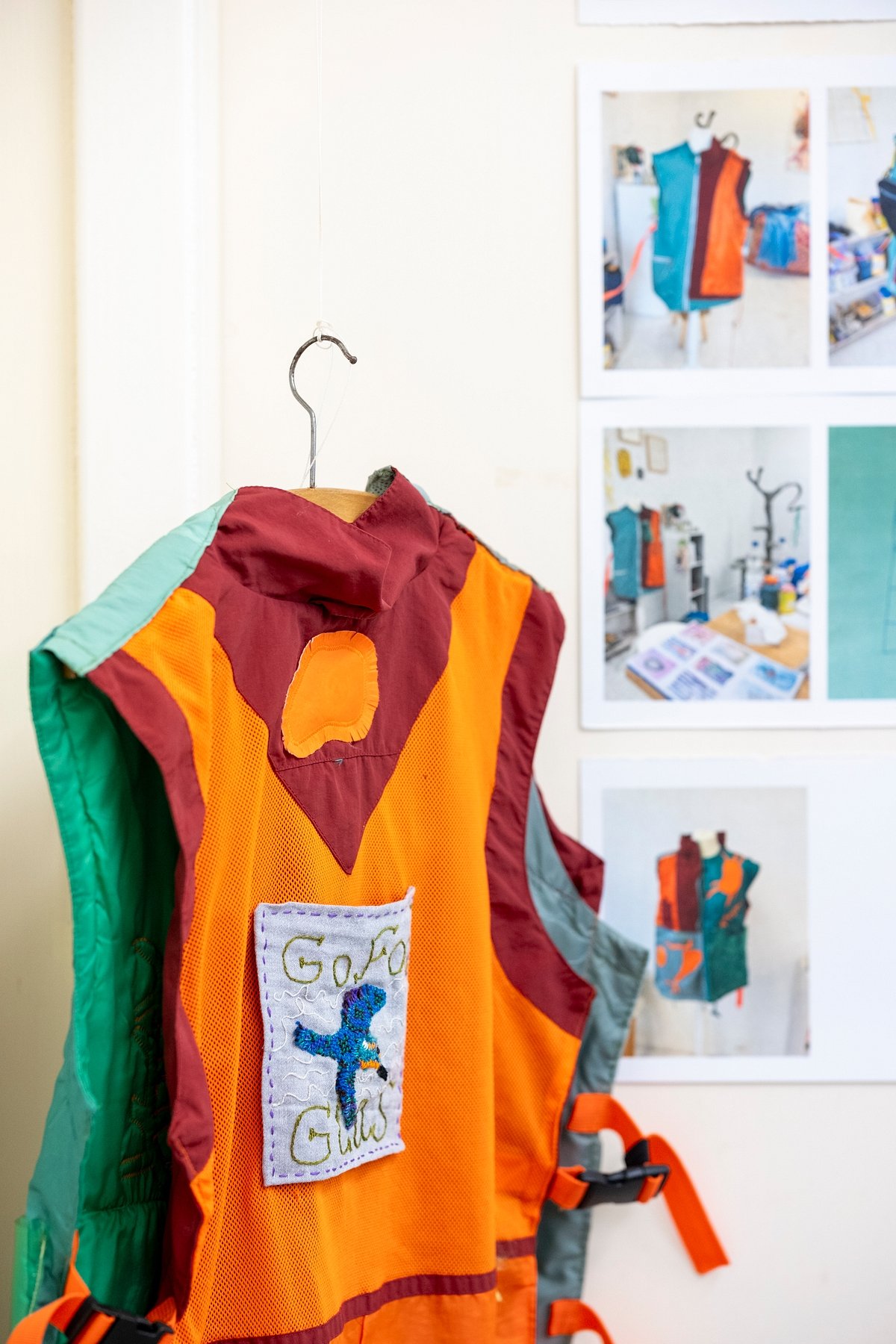
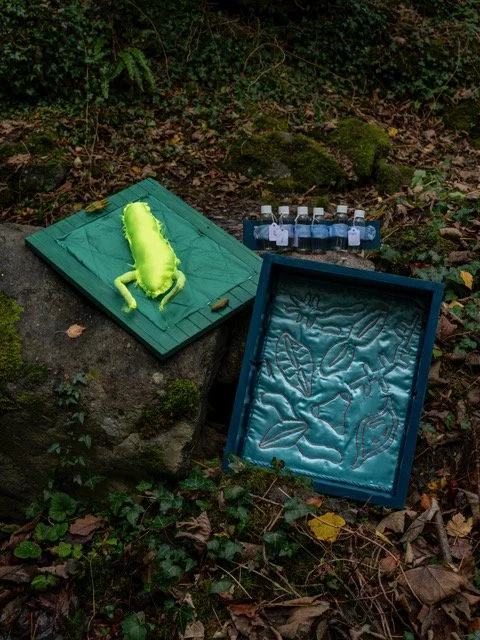
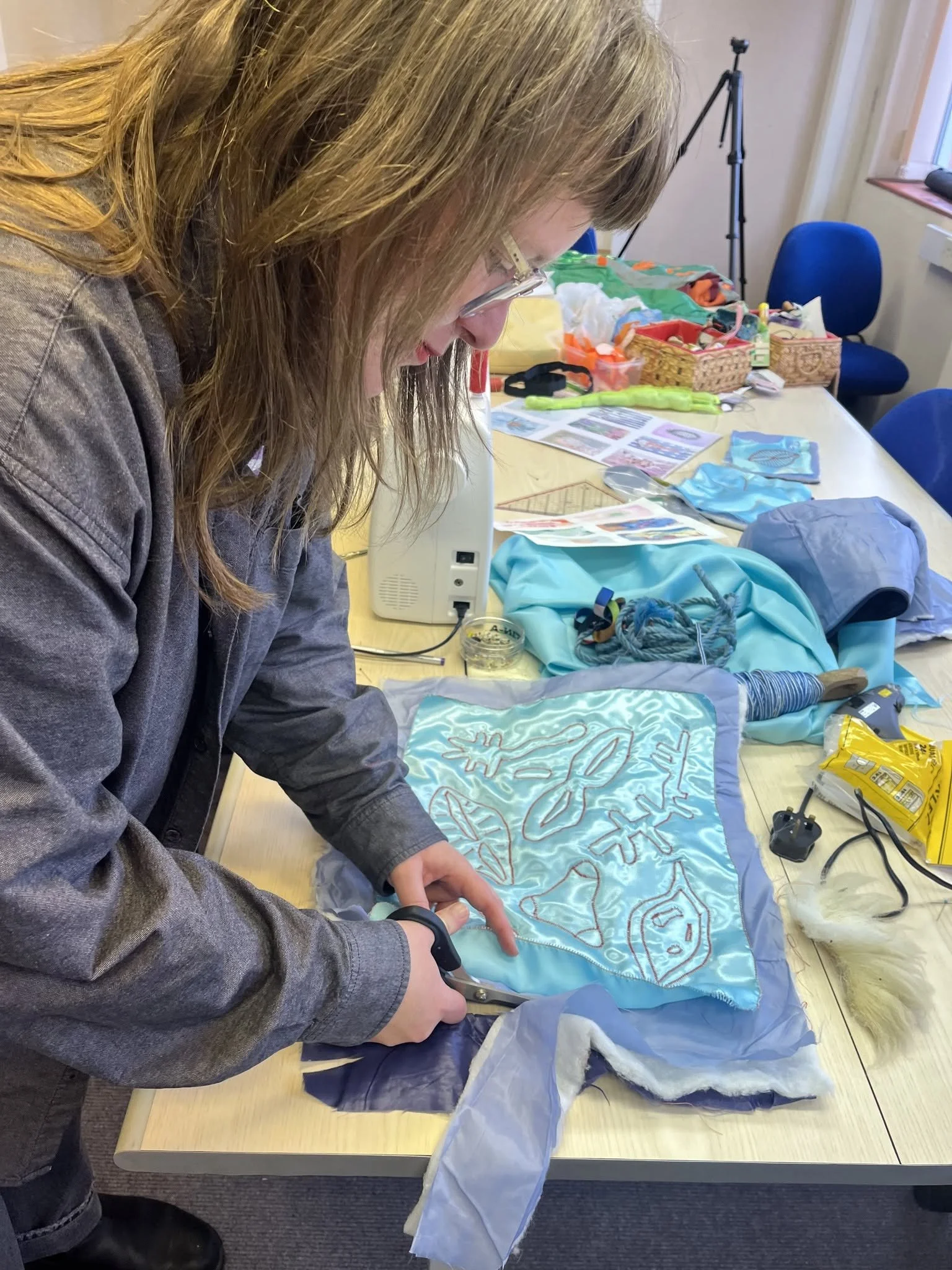
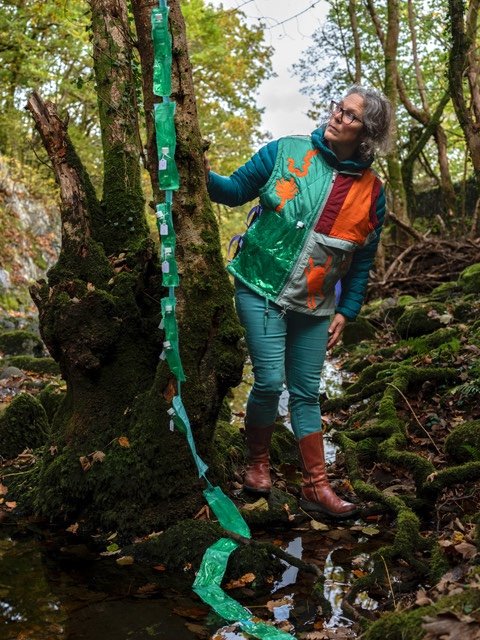
Trwy brosiect arall o’r enw Pont Ddiwylliannol fe aethom ar daith gyfnewid gydag ymarferwyr creadigol o’r Almaen sy’n ymdrin â themâu cymdeithasol. Fe ddaeth senograffydd (artist gweledol sy’n dylunio byd corfforol ac atmosfferig perfformiad neu ofod), Katharina Becklas am breswyliad pythefnos o hyd. Mewn briff agored iawn, fe’i gwahoddwyd i greu rhyw ffordd o arddangos y samplau mewn ffordd gymharol gludadwy. Fe ddyluniodd siacedi gan ddefnyddio deunyddiau wedi’u hadennill i ddal rhywfaint o samplau dŵr a hefyd blwch samplau wedi’i addurno â siapiau diatomau. Algâu microsgopig ungell ydy diatomau dŵr croyw, a chanddynt waliau gwydrog o gelloedd silica. Gellir eu defnyddio fel dangosyddion o ansawdd y dŵr gan fod gwahanol rywogaethau yn gallu goddef lefelau gwahanol o faethynnau, asid a llygredd organig.
Crëwyd y darn brodwaith o las y dorlan gan Anne sy’n gyfranogwr cymunedol sy’n ymwneud ag Edau’r Afon/Threads of the River gan Lin Cummins.
Creative outcomes - Displaying the Samples
Through another project called Cultural Bridge, we had an exchange with socially engaged creative practitioners from Germany. A scenographer (a visual artist who designs the physical and atmospheric world of a performance or space), Katharina Becklas came for a 2 week residency. In a very open brief, she was simply invited to create some way of displaying the samples in a relatively portable way. She designed jackets using reclaimed materials to house some water samples and also a sample box, decorated with shapes of diatoms. Freshwater diatoms are microscopic, single-celled algae with glass-like silica cell walls. They can be used as indicators of water quality as different species have specific tolerances to nutrient levels, acidity, and organic pollution.
The kingfisher embroided patch was sewn by Anne who is a community participant involved with Lin Cummins’ Edau’r Afon /Threads of the River.

lluniau/Images: Mark McNulty
Canlyniadau
Mae 65 o samplau wedi’u casglu gan y trigolion o bob cwr o ddalgylch afon Conwy. Dalgylch yw’r ardal o dir lle mae dŵr glaw yn casglu ac yn draenio am i lawr i un brif afon, llyn neu fôr.
Roedd lefelau isel o grynodiad maethynnau yn y mwyafrif ohonynt. Mae hyn yn golygu bod ffosffad a nitrad yn isel ar yr adeg y casglwyd y samplau. Newyddion da! Fel arfer, mae lefel isel o grynodiad maethynnau yn arwydd o statws ecolegol da. Gall lefelau cymedrol ac uchel o grynodiad maethynnau fod yn arwydd o statws ecolegol gwael.
Cymerwyd nifer fechan o samplau i lawr o weithfeydd trin carthion ac roedd lefelau ychydig yn uwch o ffosffad yn y rhain.
Fe wnaethon ni hefyd fesur y pH, a dyma’r mesur o ba mor asidig neu alcalïaidd yw rhywbeth. Er enghraifft, mae lemwn yn asidig iawn, gyda pH o tua 2-3, tra bod hylif cannu (bleach) yn alcalïaidd iawn, gyda pH o tua 12. Yn system afon Conwy, roedd y gwerthoedd pH yn yr afonydd a’r nentydd yn amrywio rhwng pH 5 a pH 7.5. Dyma fyddech chi’n ei ddisgwyl ar y cyfan, am fod yr ucheldiroedd yn draenio o fawn, sy’n tueddu i fod yn fwy asidig, tra bod y rhannau o’r afonydd yn yr iseldir fel arfer yn fwy niwtral gyda pH7. Yn ogystal, mae’r planhigfeydd conwydd yn nalgylch afon Conwy yn achosi pridd mwy asidig. Mae pH dŵr yn gysylltiedig â defnydd o’r tir yn lleol, y mathau o bridd, ac arferion rheoli amaethyddol.
Fodd bynnag, mae’n bwysig deall mai ciplun o un adeg benodol ydy’r samplau hyn, ac i gael canlyniadau mwy ystyrlon a allai ddangos patrymau ac amrywiaeth, mae angen cymryd samplau’n fwy rheolaidd ac yn fwy trylwyr.
Felly, natho ni gysylltu hefo rhaglen Lab Dŵr Ymddiriedolaeth Afonydd Gogledd Cymru a oedd wedi ceisio sefydlu gwaithgaredd profi dŵr gan wirfoddolwyr yn Nyffryn Conwy fel rhan o’u menter gwyddoniaeth dinasyddion, ‘Lab Dŵr’. Gan nad oeddent wedi llwyddo i gadw gwirfoddolwyr, natho ni wahodd bobol oedd wedi cymryd rhan yn ein gweithgaredd samplo i gymryd rhan mewn profion mwy rheolaidd fel rhan o’r hwb leol. Bellach, mae grŵp o wyth unigolyn yn samplu’n rheolaidd yn ardaloedd Eglwysbach, Trefriw, Llanrwst a Dolwyddelan; maent yn rhannu’r offer profi ac wedi bod yn cofnodi ansawdd y dŵr ers mis Ionawr 2026.
Gallwch weld eu data yma: map data byw.
Mae yna lawer o gemegau anweledig eraill hefyd, ynghyd â firysau a bacteria yn y dŵr sy’n gofyn dadansoddi arbenigol. Mae Prifysgol Bangor wedi bod yn astudio’r firysau a hefyd y bacteria yn Afon Conwy. Maent wedi bod yn dylunio model cyfrifiadurol i ddarparu hysbysiadau risg awtomataidd mewn amser real pan ganfyddir lefelau uchel o bathogenau.
Gellir asesu iechyd dŵr croyw hefyd drwy gyfrwng “dangosyddion biolegol”. Dyma pryd mae gwyddonwyr a dinasyddion monitro yn asesu presenoldeb, toreithrwydd ac amrywiaeth organebau byw yn y dŵr i bennu iechyd cyffredinol yr afon.
Yn wahanol i brofion cemegol, sydd ond yn cynnig “ciplun” byr o ansawdd dŵr ar yr union eiliad y caiff sampl ei gymryd, mae dangosyddion biolegol (neu fioddangosyddion) yn adrodd hanes byw hirdymor yr afon. Am fod yr organebau hyn yn byw yn y dŵr drwy’r amser, bydd achos sydyn o lygredd neu ollyngiad carthffosiaeth wythnosau ynghynt yn gadael effaith hirhoedlog ar eu poblogaethau. Gellir rhannu’r gwaith asesu i 3 grŵp: Macroinfertebratau’r Afon, Diatomau (Algâu Microsgopig), Poblogaethau o Bysgod Mudol.
Mae Cyfoeth Naturiol Cymru (CNC) yn gwneud rhywfaint o waith monitro biolegol rheolaidd ar ddiatomau (gweler yma) a hefyd ar boblogaethau o bysgod – Crynodebau dalgylchoedd eogiaid a siwin. Mae’r setiau data amrwd a gynhyrchwyd gan arolygon pysgod Dyffryn Conwy CNC o 1974 hyd heddiw yn gofnodion cyhoeddus. Gallwch weld cyfesurynnau samplu, cyfrifon rhywogaethau, a methodoleg yr arolygon drwy Borth Arolygon Pysgod Dŵr Croyw MapDataCymru.
Results
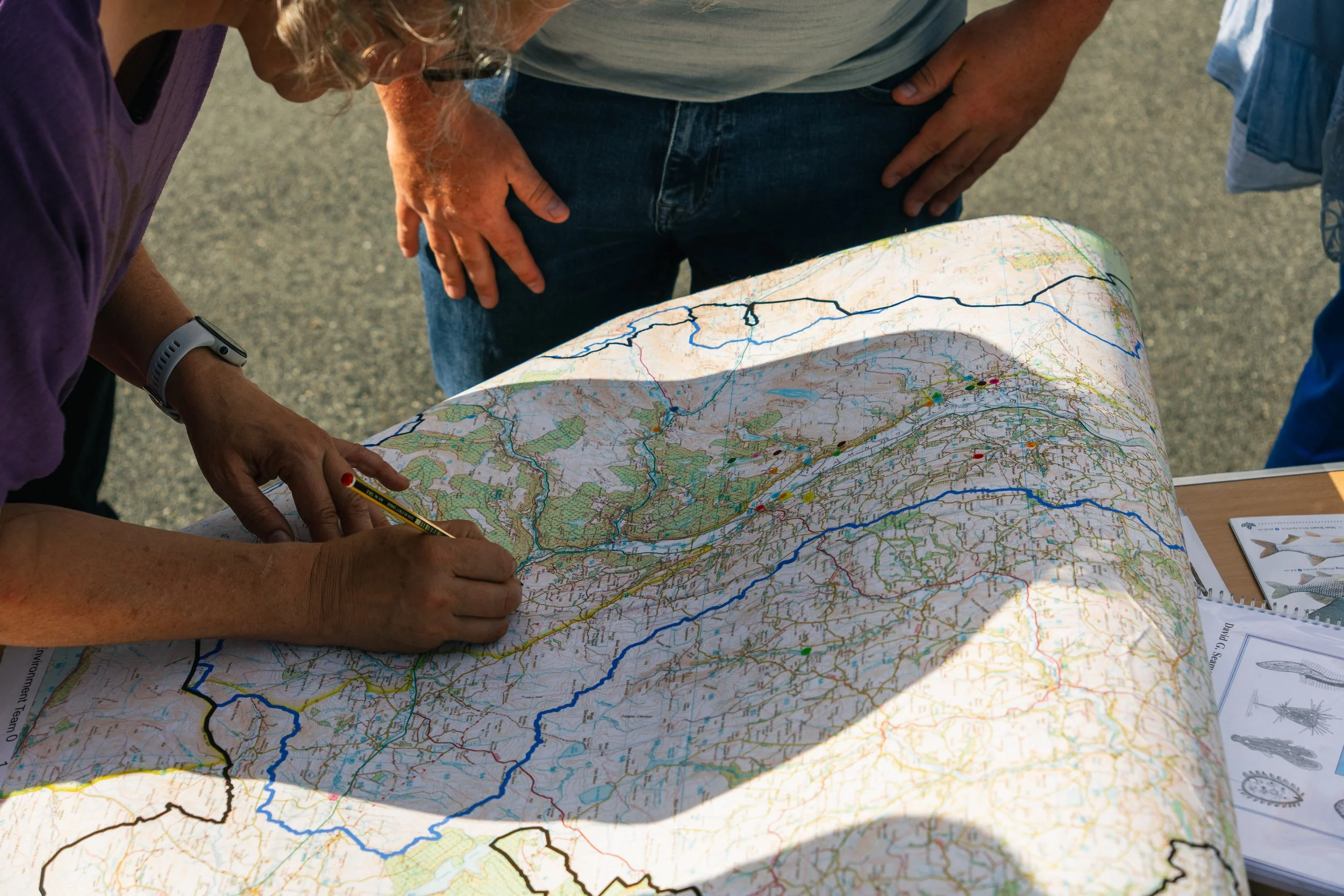
65 Samples have been collected by the residents from across the Conwy Catchment - the area of land where precipitation collects and drains downhill to eventually reach the River Conwy.
The majority of the samples showed low nutrient concentrations, this means that both phosphate and nitrate were low at the time the samples were collected. This is good news! Good ecological status usually results from low nutrient concentrations, while poor ecological status may result from moderate and high nutrient concentrations.
However, there were a small number of samples taken below sewage treatment works which had slightly higher phosphate levels.
We also measured the pH and this is the measure of how acid or alkaline something is. For example lemon is very acid approx pH 2-3 while bleach is very alkaline approx pH 12. In the Conwy river system the pH values in the rivers and streams ranged from pH 5 to pH 7.5. This is generally what you would expect as the upland areas drain from peat bogs, which tend to be more acidic, while lowland river sections are typically more neutral pH7. Also the conifer plantations in the Conwy Catchment result in more acid soils. The pH of water is linked with local land use, soil types, and agricultural management practices.
However it is important to understand that these samples are a snapshot of time and in order to have more meaningful results which may show patterns and variation, sampling needs to be done more regularly and more rigorously.
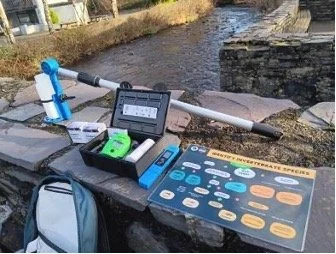
So we linked up with the North Wales Rivers Trust who had tried to establish volunteer water testing in the Conwy Valley as part of their citizen science Lab Dwr initiative. They hadn’t been able to retain volunteers, so we invited those who had participated with our sampling activity to take part in more regular testing as part of a hub. Now there is a group of 8 regular samplers in the Eglysbach, Trefriw, Llanrwst, Dolwyddelan areas, who share the testing kit, who have been recording water quality since January 2026.
Their data can be seen here Live data map.
There are also many other invisible chemicals, plus viruses and bacteria in the water which requires specialist analysis. So we also supported Prifysgol Bangor University’s engagement with the community as part of their studying the viruses and also bacteria in the Afon Conwy River. They have been designing a computer model to provide automated, real-time risk alerts regarding pathogen spikes.
The health of freshwater can also be assessed through “biological indicators”. This is when scientists and citizen monitors assess the presence, abundance, and diversity of living organisms in the water to determine the overall health of the river.
Unlike chemical testing, which only gives a brief "snapshot" of water quality at the exact moment a sample is taken, biological indicators (or bioindicators) act as long-term, living histories of the river. Because these organisms live in the water continuously, a sudden pollution incident or sewage spill weeks prior will leave a lasting impact on their populations. Assessment can be divided into 3 groups, River Macroinvertebrates, Diatoms (Microscopic Algae), Migratory Fish Populations.
There is some regular biological monitoring carried out by Natural Resources Wales (NRW) on diatoms see here and also on fish populations Salmon and sea trout catchment summaries. The raw datasets generated by NRW's Conwy Valley fish surveys from 1974 to the present are public records. You can view sampling coordinates, species counts, and survey methodology via the open-access DataMapWales Freshwater Fish Surveys Portal.
Y Camau Nesaf
Mae wedi bod yn wych datblygu ein harchif dŵr ac rydym yn dal i gynnig profi dŵr gyda chi, felly cysylltwch â ni yma https://www.gofodglas.org/sampledwr
Dros y flwyddyn nesaf rydym hefyd yn awyddus i glywed oddi wrthoch chi os oes gennych ddiddordeb mewn unrhyw agwedd ar arsylwi rhan o afon yn agos atoch chi. Er enghraifft os oes gennych ddiddordeb mewn: cymryd ffotograff o’r un lleoliad yn rheolaidd neu ei ddarlunio neu ysgrifennu amdano, a yw’n newid dros amser ac ym mha ffyrdd? Ebostiwch Katie
So what’s next?
It has been fantastic to develop our water archive and we are still offering to test water with you, so please get in touch here https://www.gofodglas.org/sampledwr
Over the next year we are also keen to hear from you if you are interested in any aspect of observing a section of river near to you. For example if you are interested in regularly taking a photo from the same location or drawing it or writing about it, does it change over time and in what ways?
Please Email Katie